




Resources — The Handbook
The architecture diagrams from the Handbook — yours to download and edit
Every architecture diagram in the Microsoft Power Platform Solutions Architect’s Handbook is available here as an editable file — a starting point for your own As-Is and To-Be models, fit-gap structures and integration designs, rather than a blank canvas.
What’s included
Every diagram from the second edition
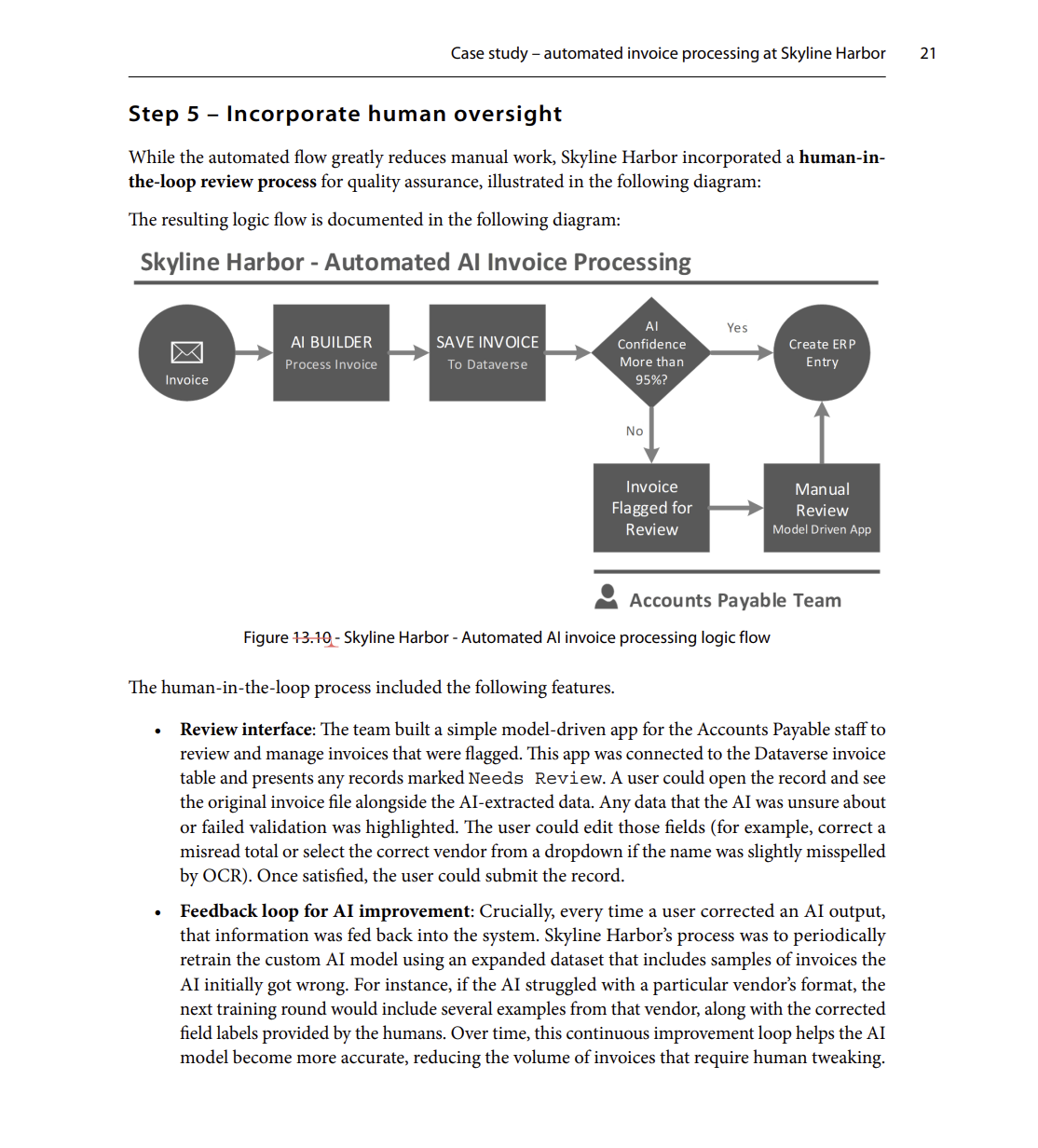
This file contains editable versions of the key diagrams and illustrations presented in the book. We encourage you to use these visuals as templates and starting points for your own project documentation. Customise them to fit your specific solution architecture and design needs.

A sample row showing several of the diagrams included in the file.
The diagrams are organised into the following categories, with each category located on a separate page within the file:
- Architecture Diagrams
- Business Process Diagrams
- Requirements Analysis Diagrams
- Design Diagrams
- Data Modelling Diagrams
- Integrations Diagrams
- AI Design Diagrams
- ALM Diagrams
We hope these resources help you accelerate your design and documentation process.
Get the diagrams
Download the diagrams from Packt
The Handbook’s full diagram set — the editable Visio file and the printable PDF — lives on the Packt resource page alongside the book’s other reader downloads.
packt.link/ZPkgF · opens on the publisher’s site
Using the diagrams
Free to adapt for your own work
These are my own diagrams from my published book, shared here so practitioners can build on them rather than start from a blank canvas. You are welcome to download them, edit them and reuse them in your own architecture documents and proposals. A credit back to the Handbook is appreciated but not required.
The diagrams stand on their own, but the book is where the reasoning behind each one lives — why a model is shaped the way it is, and the decisions that sit underneath it.
Want the thinking behind the diagrams?
The Handbook works through each of these diagrams in context. If you would like to talk through how the same approach applies to a programme of your own, that is an easy conversation to start.